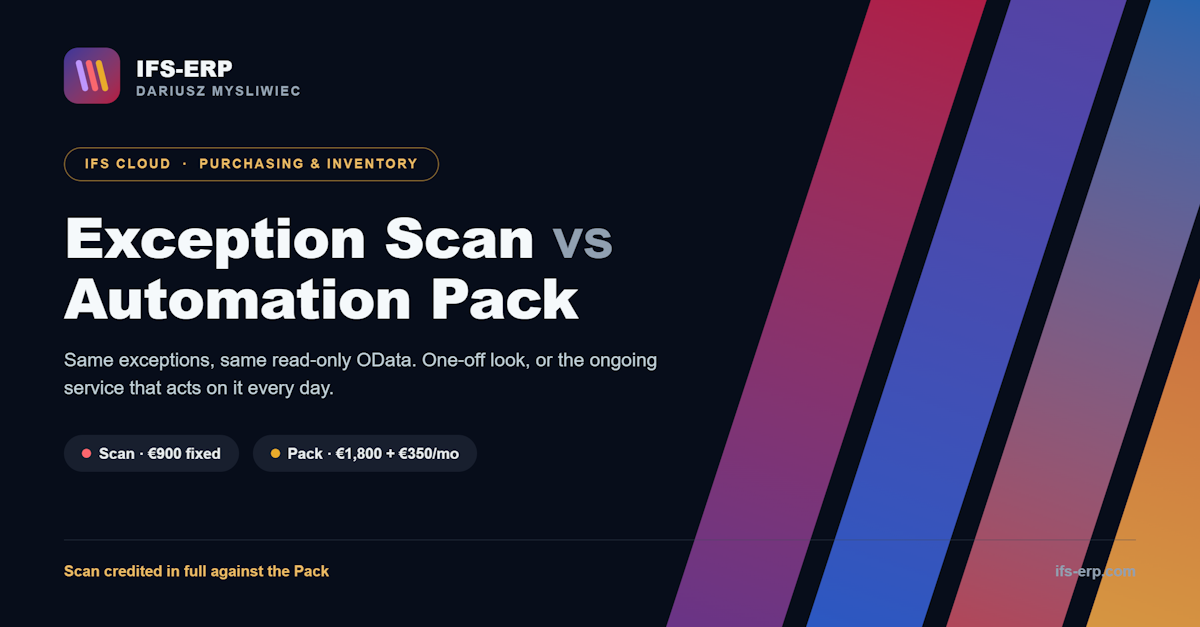
Skan Wyjątków SCM kontra Pakiet Automatyzacji SCM
IFS Cloud · Zakupy i magazyn Chcesz zobaczyć swoje wyjątki, czy mieć je pod stałą kontrolą? Skan Wyjątków SCM i Pakiet Automatyzacji SCM czytają te same…
Czytaj dalej
IFS Cloud · Zakupy i magazyn Chcesz zobaczyć swoje wyjątki, czy mieć je pod stałą kontrolą? Skan Wyjątków SCM i Pakiet Automatyzacji SCM czytają te same…
Czytaj dalejIFS Cloud · Monitoring wyjątków w zakupach i magazynie Pakiet Automatyzacji SCM Usługa monitorująca wyjątki w zakupach i magazynie w IFS Cloud, która ostrzega…
Czytaj dalejIFS Cloud · Zakupy i magazyn Pięciodniowy skan tylko do odczytu, który pokazuje wyjątki już siedzące w Twoich danych IFS Cloud: niepotwierdzone zamówienia…
Czytaj dalejDane z IFS Cloud tam, gdzie ktoś naprawdę na nie czeka, bez pytania „czy ktoś to dziś wysłał”. Zdefiniuj zakres danych raz. Aplikacja pobiera go z IFS Cloud…
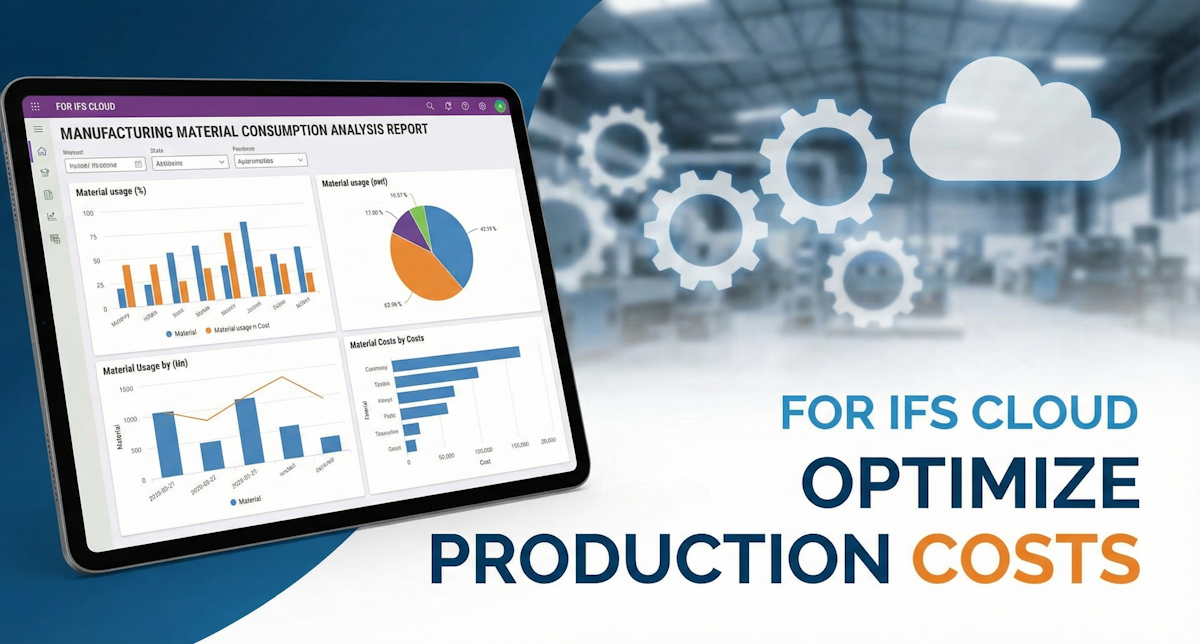
Czytaj dalejID PRODUKTU: REP-MAN-001 | Szybki raport SQL Analiza Zużycia Materiałów Produkcyjnych Zyskaj pełną widoczność kosztów produkcji. Szczegółowe zestawienie…
Czytaj dalejID produktu: REP-INV-002 | Kategoria: Łańcuch dostaw Monitor zagrożonych dostaw do klientów dla IFS Cloud i IFS Applications 10 Bieżący podgląd wierszy…
Czytaj dalej
Oblicz zwrot z inwestycji